Property Management
Pro Tips
Fire extinguisher servicing intervals:Are you compliant?
Learn correct fire extinguisher servicing intervals under UK law to keep your property compliant and fire safety equipment ready.
Fire extinguisher servicing intervals:Are you compliant?
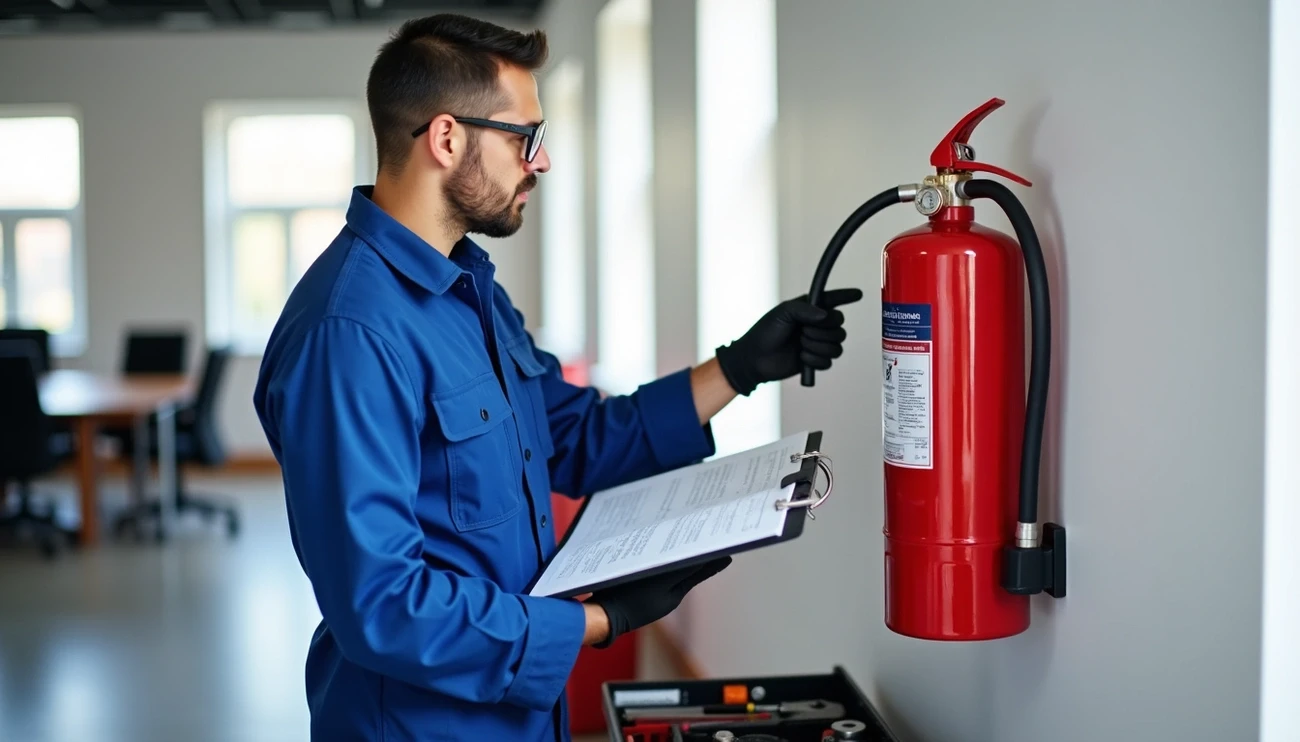
Fire extinguisher servicing intervals: Are you compliant with current UK regulations? Many businesses unknowingly fall short of their legal fire safety obligations, putting both property and lives at risk. Failing to maintain these critical safety devices properly can result in significant penalties, including fines and potential imprisonment for serious breaches.
Understanding how often fire extinguishers should be serviced is a fundamental responsibility for UK business owners. However, the requirements extend beyond simple annual checks. Fire extinguisher servicing requirements UK businesses must follow include monthly visual inspections, yearly maintenance by certified technicians, and extended service intervals for specific extinguisher types. Furthermore, knowing who can legally perform these services is equally important for maintaining compliance.
This comprehensive guide explains everything you need to know about fire extinguisher servicing intervals in 2024, helping you navigate the legal landscape and ensure your premises remain both safe and compliant with current legislation.
Understanding UK Fire Safety Law
The legal landscape surrounding fire safety in the UK rests upon several key pieces of legislation that dictate how businesses must maintain fire extinguishers. Understanding these regulations is essential for maintaining compliance and ensuring the safety of everyone on your premises.
The Regulatory Reform (Fire Safety) Order 2005
The cornerstone of modern fire safety legislation in England and Wales is the Regulatory Reform (Fire Safety) Order 2005, commonly referred to as the FSO or RRO. Implemented in 2006, this order consolidated over 70 separate pieces of fire safety legislation into a single, coherent framework. This simplification aimed to reduce the number of enforcing authorities and create clearer guidelines for fire safety management.
The FSO applies to virtually all non-domestic premises, including offices, shops, care providers, community halls, pubs, schools, hotels, factories, and warehouses. The order also covers the common areas of buildings containing two or more domestic premises.
The primary message of the FSO is straightforward: anyone with control over premises must take reasonable steps to reduce fire risks and ensure safe evacuation in case of emergency. This includes proper maintenance of fire safety equipment—specifically, fire extinguishers must be serviced according to British Standards.
Moreover, the Fire Safety Act 2021 amended the FSO to clarify that external walls, flat entrance doors, and the structure of buildings are all covered by the order and must be included in fire risk assessments.
BS 5306-3:2017 and its role in compliance
British Standard BS 5306-3:2017, published on 31 October 2017, plays a vital role in ensuring fire extinguisher compliance. This standard superseded BS 5306-3:2009 and now forms the definitive code of practise for commissioning and maintaining portable fire extinguishers.
Specifically, BS 5306-3:2017 outlines the maintenance requirements for portable fire extinguishers, detailing exactly how often they should be serviced and by whom. The standard establishes a maintenance cycle consisting of:
Monthly visual inspections by the responsible person
Annual basic service by a competent person
Extended service and overhauls at specified intervals (typically after five years)
Replacement by age 20 years at the latest
Notably, BS 5306 legislation determines different timeframes for the replacement of extinguishers depending on their type. Consequently, compliance with this standard is considered mandatory for companies seeking BAFE (British Approvals for Fire Equipment) certification.
Who is the 'responsible person'?
Under UK fire safety law, the 'responsible person' bears the ultimate accountability for fire safety compliance. This person is typically:
The employer (in workplace settings)
The building owner or landlord
The occupier or anyone else with control of the premises, such as a facilities manager
In many cases, especially in multi-occupied buildings, there may be multiple responsible persons who must work together to meet their obligations.The Fire Safety Act 2021 extended the responsible person's duties to include additional parts of multi-occupied residential buildings, making it easier for Fire and Rescue Authorities to identify who is accountable for specific areas.
The responsible person must carry out regular fire risk assessments, implement appropriate safety measures, develop an effective fire safety plan, provide relevant information and training to occupants, and ensure all fire safety equipment is properly maintained. Failure to comply with these requirements can result in fines or even imprisonment.
By understanding these legal frameworks, business owners can better grasp why proper fire extinguisher servicing intervals aren't merely good practise—they're a legal necessity.
Monthly Fire Extinguisher Checks
Beyond the annual servicing requirements, regular monthly checks form a critical part of your fire extinguisher maintenance obligations. These visual inspections help identify potential issues before they compromise safety and ensure extinguishers remain ready for use between professional servicing appointments.
What to look for during visual inspections
Monthly visual inspections don't require technical expertise but demand attention to detail. During these checks, focus primarily on the following aspects:
Position and accessibility: Verify each extinguisher is in its designated location, properly mounted, unobstructed, and clearly visible. Ensure appropriate signage is present and that operating instructions face outwards.
Physical condition: Examine the extinguisher body for exterior defects such as dents, rust, corrosion, leaks, or signs of tampering. For CO2 extinguishers, check for cracked or split horns, while wet chemical units should be inspected for clogged nozzles.
Safety mechanisms: Confirm the locking pin is intact and working properly, and that tamper seals remain unbroken. Missing or broken seals might indicate the extinguisher has been used or tampered with.
Pressure indicators: For extinguishers with pressure gauges, verify the needle sits within the green zone, indicating proper pressure levels. If readings show in red areas, the unit may be overcharged or undercharged and requires professional attention.
Content verification: For powder extinguishers, invert the unit to ensure the powder hasn't compacted or 'caked'. If you cannot hear the powder flowing freely, the extinguisher will likely fail to operate when needed.
Legibility: Ensure all operating instructions remain clean, legible, and facing outwards. Additionally, check that service labels are attached, up-to-date, and readable.
Who should perform monthly checks?
The 'responsible person' should conduct these monthly visual inspections. As established in the previous section, this person typically refers to the employer, building owner, landlord, or designated individual with control over the premises.
Monthly checks don't require the same level of technical knowledge as annual servicing. Nevertheless, the person performing these inspections should have sufficient familiarity with fire extinguisher types and their maintenance requirements. In practical terms, this could be you or a designated team member with appropriate training.
BS 5306-3 states explicitly that "visual inspections should be carried out [by the Responsible Person] at least once a month". In certain high-risk environments or locations prone to tampering, more frequent inspections may be necessary.
How to log and report issues
Documentation is as essential as the inspections themselves. After completing each monthly check, you must:
Record the inspection: Document the date, name of the inspector, and any findings. This creates an auditable trail of compliance with fire safety regulations.
Update inspection tags: Many extinguishers have monthly inspection tags attached directly to them. After each check, write the date and your initials on this tag.
Maintain a logbook: Record all inspection details in your fire safety logbook, which should be kept readily available for inspection by fire authorities.
Report and address issues: If any problems are identified during monthly checks, communicate these immediately to the relevant person or department responsible for fire safety. Arrange for a certified fire equipment company to replace, service, or repair the extinguisher as necessary.
Proper record-keeping provides evidence of compliance with legal requirements and helps track the maintenance history of each extinguisher. Additionally, if you employ five or more people, maintaining these records becomes a legal requirement subject to inspection by the Fire Services Inspectorate.
Annual Servicing Requirements
Regular inspections form just part of your fire safety obligations. Annual professional servicing represents the cornerstone of compliant fire extinguisher maintenance and is mandated by UK legislation.
What a certified technician checks
Unlike monthly visual inspections, annual servicing demands rigorous technical evaluation by qualified professionals. During this comprehensive assessment, a certified technician will perform:
A detailed visual inspection for corrosion, damage or signs of tampering
Weight and pressure gauge measurements to verify correct levels
Examination of the nozzle, hose and discharge mechanisms for blockages
Inspection of the cylinder condition, safety pins and tamper seals
Assessment of operating instructions for legibility
Replacement of parts including seals and O-rings as necessary
Risk assessment of the area to confirm the extinguisher remains suitable for potential hazards
Documentation of service details on tags and in logbooks
Essentially, this thorough evaluation ensures your extinguishers remain safe, reliable, and fit for purpose throughout the year.
Why annual servicing is legally required
Annual servicing isn't optional—it's a legal obligation under UK fire safety legislation. The Regulatory Reform (Fire Safety) Order 2005 explicitly requires businesses to maintain fire safety equipment in proper working order. This maintenance must comply with British Standard BS 5306-3:2017, which mandates annual servicing by competent persons.
Fire extinguishers are classified as "life safety equipment," hence the stringent requirements. The law applies to virtually all non-domestic settings, including offices, shops, factories, schools, restaurants, hotels and community venues.
Undeniably, the responsibility falls on the 'responsible person'—typically the business owner or designated fire safety manager—to arrange these annual services and maintain accurate records for inspection.
What happens if you skip it?
Neglecting annual servicing carries serious repercussions that extend beyond mere regulatory non-compliance:
Firstly, legal penalties can be severe. Businesses face fines up to £5,000 for minor breaches, with unlimited fines and potential imprisonment for serious violations.
Secondly, insurance implications are significant. Most insurers require evidence of properly maintained fire safety equipment; non-compliance could void your policy entirely, leaving you liable for all damages and legal costs following a fire incident.
Thirdly, there's the increased fire risk. Unmaintained extinguishers may fail when needed most—potentially resulting in uncontrolled fire spread that threatens lives and property.
Perhaps most alarmingly, in cases where negligence leads to injury or death, business owners could face prosecution under corporate manslaughter laws. Additionally, authorities have the power to shut down businesses with persistent fire safety violations until issues are resolved.
## Extended Servicing and Overhaul Intervals
While annual servicing is crucial, the comprehensive maintenance of fire extinguishers extends beyond yearly checks. Different extinguisher types require specific extended servicing at prescribed intervals to remain fully functional and compliant with British Standards.
5-year servicing for water, foam, and powder
Beyond the annual basic service, water, foam, and powder extinguishers must undergo an extended service every five years. This more thorough examination involves:
A complete discharge test to verify the extinguisher empties properly
Internal inspection for corrosion, wear, or contamination
Refilling and repressurising the extinguisher
For water and foam extinguishers, this refilling can typically occur on-site. Powder extinguishers, on the other hand, often require special handling due to the messiness of the refilling process. Some providers now offer a 'service-exchange' approach—swapping your extinguisher with a newly refurbished or replacement unit rather than conducting the extended service on-site.
10-year overhaul for CO2 extinguishers
CO2 extinguishers follow a different maintenance pattern owing to their high-pressure cylinders. These units require a complete overhaul every 10 years. This legally mandated process includes:
Full hydraulic testing at pressures exceeding 200 bar
Comprehensive examination of the cylinder's structural integrity
Complete renewal of the head assembly prior to recharging
Due to the specialised equipment needed, this overhaul cannot be performed on your premises. Instead, certified technicians typically implement a service-exchange, replacing your CO2 extinguisher with a factory-tested unit.
When replacement is better than servicing
At certain points, replacing extinguishers becomes more practical than continued servicing. Several factors influence this decision:
The 20-year rule applies universally—all fire extinguishers should be replaced once they reach 20 years of age, regardless of their apparent condition. This represents the maximum service life in any circumstance.
Cost considerations often make replacement more economical than extended servicing, particularly as extinguishers age. Many service providers offer new units at prices comparable to or less than refilling costs.
Environmental factors also play a role. BAFE and the Environment Agency advise against discharging water-based extinguishers onto open land or down drains. This environmental guidance has shifted industry practises toward replacement rather than discharge testing and refilling.
Given these factors, many businesses now opt to replace extinguishers at their extended service intervals rather than investing in testing and refilling ageing units.
## Who Can Service Fire Extinguishers?
Ensuring proper fire extinguisher maintenance requires understanding not just when servicing should occur, but who is qualified to perform it. The selection of a properly qualified individual or company directly impacts your compliance with UK fire safety regulations.
What is a 'competent person'?
British Standard BS 5306-3 clearly defines a 'competent person' as someone "with the necessary training and experience, with access to the relevant tools, equipment and information, manuals and knowledge of any special procedures recommended by the manufacturer of the portable fire extinguisher, to carry out the relevant maintenance procedures". This definition emphasises both technical knowledge and practical capability. The responsible person must verify that whoever services extinguishers possesses these qualifications.
BAFE certification and technician standards
BAFE (British Approvals for Fire Equipment) provides the gold standard for fire extinguisher technician certification in the UK. Their SP101 scheme specifically assesses the competency of both organisations and individual technicians. Certified technicians must:
Complete a recognised BS 5306 examination
Undergo refresher training every three years
Pass an on-site assessment by independent BAFE assessors
Demonstrate competence in BS 5306 Parts 3, 8 and 9
Provide evidence of asbestos awareness and health and safety training
Properly certified technicians carry BAFE ID cards that can be verified by contacting BAFE directly [4].
Can you do it yourself?
Monthly visual inspections can indeed be performed by trained staff members. Actually, these basic checks are typically conducted by the responsible person or a designated employee. Nevertheless, annual servicing and extended maintenance must be performed by certified professionals. Attempting DIY technical servicing or recharging is not only inadvisable but potentially illegal in commercial settings. Furthermore, self-service without proper qualifications could invalidate your insurance coverage.
Conclusion
Fire extinguisher maintenance stands as a crucial legal requirement for all UK businesses, not merely a recommended practise. Failing to adhere to these regulations carries significant consequences, from substantial fines to potential imprisonment in serious cases. Additionally, neglected maintenance might render your insurance coverage invalid, leaving your business financially vulnerable during emergencies.
Compliance requires a multi-layered approach to servicing. Monthly visual inspections performed by your designated responsible person serve as your first line of defence. These checks must be supplemented with annual professional servicing by BAFE-certified technicians who thoroughly examine every component. Specific extinguisher types need extended servicing at 5-year intervals, while CO2 units require complete overhauls after 10 years. Regardless of condition, all fire extinguishers must be replaced after reaching their 20-year maximum service life.
Proper documentation remains essential throughout this maintenance cycle. Comprehensive records provide evidence of your compliance during inspections and help track each extinguisher's service history. This systematic approach to fire safety equipment maintenance not only keeps your premises legally compliant but also ensures these critical safety devices will function effectively when lives depend on them.
Fire safety compliance might seem complex, yet the alternative—putting lives and property at risk—makes proper maintenance worth every effort. By understanding and following these servicing requirements, you create a safer environment for everyone on your premises while avoiding the serious legal and financial penalties associated with non-compliance.
Explore
Discover expert insights, tips, and updates on property compliance, safety regulations, and best practices to keep your properties secure and compliant.