Property Management
Basics
Common Fire safety failures in UK Properties- How to avoid them?
Discover common fire safety failures in UK properties and how landlords can avoid fines, stay compliant, and protect tenants.
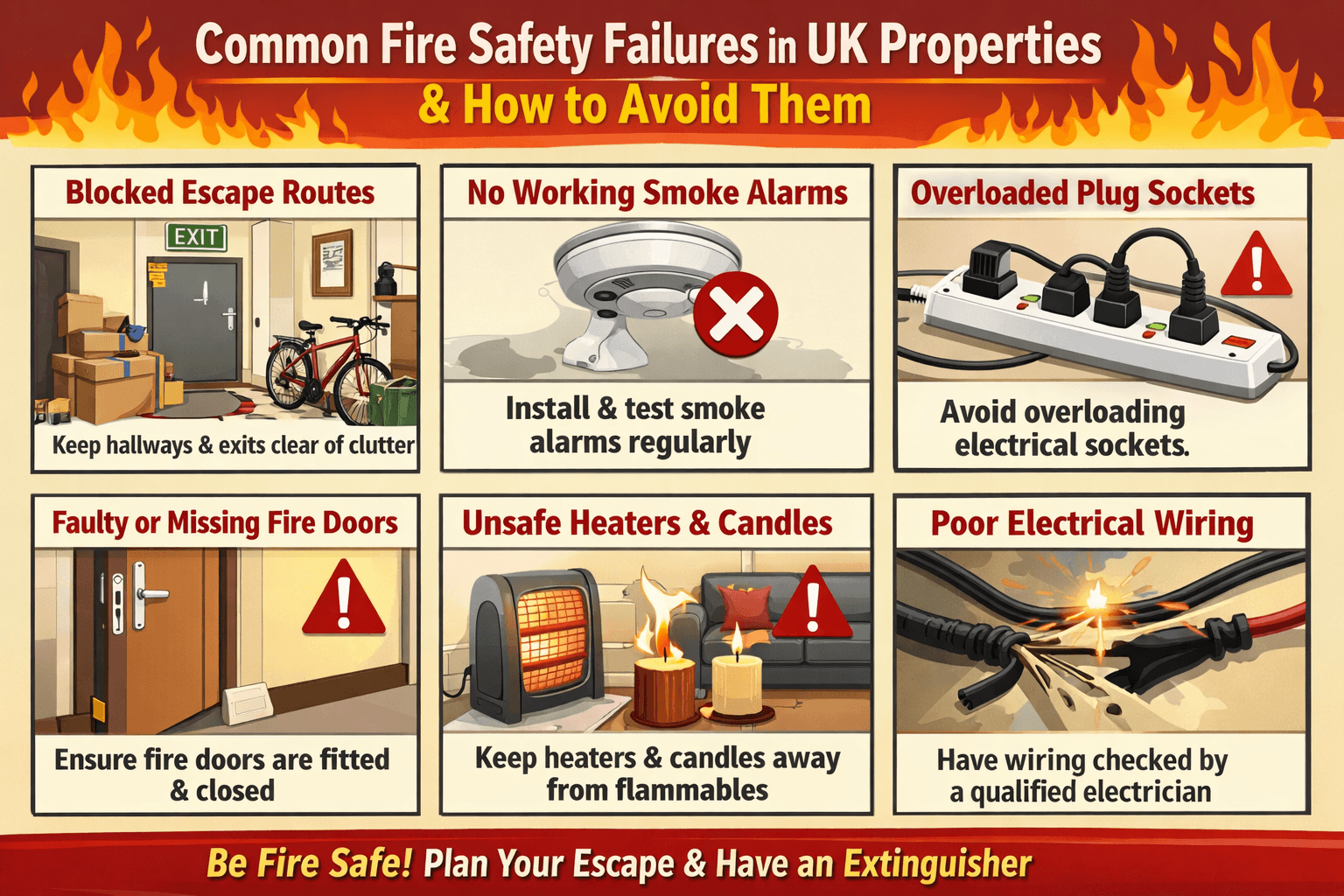
Fire safety regulations in the UK protect lives and properties - they're not just bureaucratic red tape. The London Fire Brigade responds to thousands of residential fires each year. Many of these fires could have been prevented with proper awareness and maintenance . A recent case shows these dangers clearly: authorities fined a property manager £26,000 after finding multiple fire safety violations, including missing fire detection equipment and poor escape routes .
Property owners and managers need to understand that compliance is essential. The Regulatory Reform (Fire Safety) Order 2005 sets strict legal requirements . Violations can lead to unlimited fines or up to two years in prison . Insurance companies might reject claims if they find fire safety violations . A care home learned this lesson the hard way when it faced £50,000 in penalties for breaking fire safety regulations .
This piece will give you the knowledge about common fire safety failures in UK properties and practical solutions to avoid them. You'll learn everything needed to keep your property compliant and safe. We'll cover blocked escape routes, faulty alarms, and inadequate risk assessments to protect all occupants effectively.
Blocked Escape Routes and Obstructed Exits

History shows the deadly price of blocked fire exits. Looking at catastrophic fires over the last 200 years reveals a pattern - people died because they couldn't escape through blocked exit routes. This grim reality shows why property owners and managers must keep escape paths clear.
History shows the deadly price of blocked fire exits. Looking at catastrophic fires over the last 200 years reveals a pattern - people died because they couldn't escape through blocked exit routes. This grim reality shows why property owners and managers must keep escape paths clear.
Why blocked exits are a major hazard
Every second matters in an emergency. Blocked fire exits can turn a manageable situation into a tragedy by substantially hindering evacuation efforts. Lives depend on knowing how to get out quick and safe during a fire. Blocked escape routes lead to panic and congestion that make orderly evacuation impossible.
These blocked exits put both occupants and emergency responders at risk. Firefighters and rescue teams need clear paths to enter buildings fast. Blocked routes slow down their response time and delay critical rescue efforts.
The legal consequences are just as severe. Article 14 of the Regulatory Reform (Fire Safety) Order 2005 requires responsible persons to keep "routes to emergency exits from premises and the exits themselves are kept clear at all times". Breaking these rules can result in heavy fines, as shown by many UK prosecutions.
Common causes in UK rental properties
Several issues lead to blocked fire exits in rental properties:
Improper furniture placement and storage practises - Objects and furniture in corridors block quick evacuation. Small properties often tempt people to use hallways as storage space.
Neglected maintenance and construction debris - Renovation materials often end up in escape routes. Even small issues like loose carpet can make people trip during emergencies.
Tenant behaviour and seasonal changes - Personal items in shared spaces and holiday decorations block paths. It also happens with mobility scooters, e-scooters, and e-bikes that people charge or store in common areas—a practise that must stop.
How to keep escape routes clear
Start with a strict no-storage policy in common areas. No resident should store belongings or leave trash in shared spaces. Make this policy clear to tenants during their fire safety training.
You need regular inspections. The London Fire Brigade suggests routine checks to verify emergency routes and exits work properly [4]. Watch for layout changes or storage that might block escape paths.
Landlords and property managers must:
Make escape routes short and direct
Mark and protect escape paths clearly
Install emergency doors that open easily toward the escape direction
Add emergency lighting where needed
Check stairway doors regularly to ensure proper self-closing and gaps under 4mm
Emergency exit doors have specific requirements. Buildings must keep these doors unlocked and available without keys or codes while people are inside. Sliding or revolving doors can't serve as fire exits.
Talk to your property manager if you spot serious fire risks like locked or blocked exits. The local fire authority should send an inspector within three hours for serious risks if the manager won't act.
Note that everyone shares responsibility for fire safety. Clear communication with tenants and proper maintenance ensures escape routes stay available exactly when people need them most.
Missing or Faulty Smoke and Fire Alarms
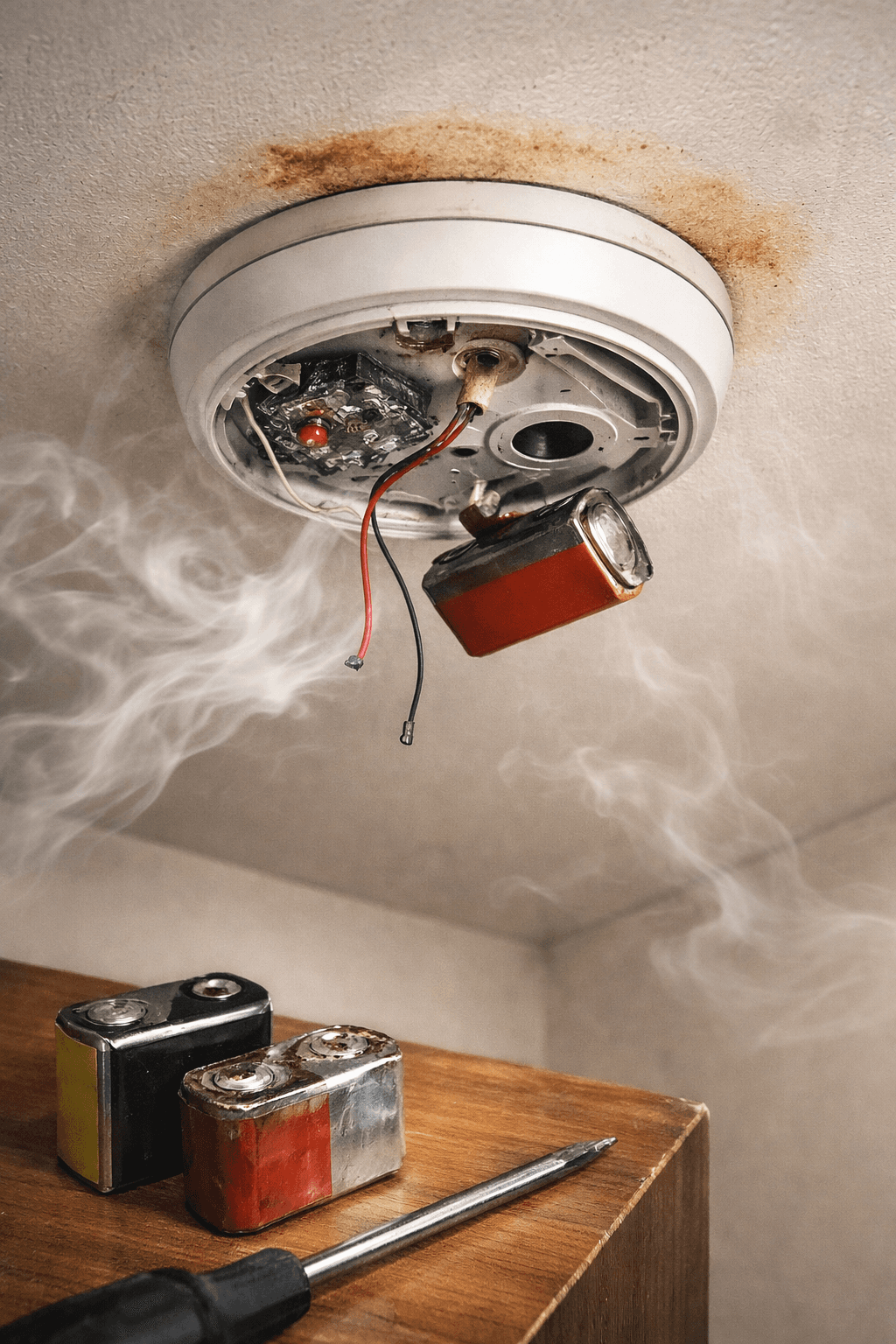
Blocked exits stop people from escaping during a fire, but faulty alarms disable the vital early warning system that gives people time to get out. Firefighters discovered that over a third of battery-powered smoke alarms failed to work during home fires. These numbers show why proper alarm installation and maintenance need serious attention.
Legal requirements for alarms in UK homes
Since October 2022, both private and social landlords must make sure at least one working smoke alarm is installed on each storey of their property where people live [8]. On top of that, carbon monoxide alarms must be placed in any room with a fixed combustion appliance (excluding gas cookers).
Properties built after June 1992 must have hardwired smoke alarms on every floor according to building regulations. Requirements vary across the UK:
In Scotland (since February 2022): Interlinked alarms are mandatory, with one smoke alarm in the most-used room, one in circulation spaces on each storey, and one heat alarm in every kitchen.
In Northern Ireland (from September 2024): Heat alarms in kitchens, smoke alarms in main living areas and circulation spaces, and carbon monoxide alarms where required.
How to test and maintain alarms
British Standard BS 5839-6: 2019 requires weekly testing of all fire alarms to check if they work. You need to press the test button until the alarm sounds – if nothing happens, replace the battery right away.
A fire alarm engineering company should inspect the alarms every 6 months. These inspections need recording in a logbook kept near the fire control panel, ready for inspection anytime.
For maintenance best practises:
Vacuum alarms every six months to remove dust
Replace batteries annually in standard battery models
Replace the entire alarm every ten years for 10-year sealed models
Report beeping alarms right away as this means the battery is failing
What landlords must do to stay compliant
Landlords must verify all alarms work properly on the first day of any new tenancy. So they should document this testing and give copies to tenants as proof of compliance.
From October 2022, landlords must fix or replace any faulty alarms after tenants report them. This marks a big change since tenants used to handle this during their stay.
Breaking these rules leads to serious penalties. Local housing authorities can issue fines up to £5,000 per breach. Licenced properties face even steeper consequences - violations can result in civil penalties up to £30,000.
In the end, working smoke alarms save lives. Their success depends on proper installation, regular testing, and quick maintenance—responsibilities that both landlords and tenants share throughout the tenancy.
Lack of Fire Risk Assessments
A newer study shows that over a third of businesses lack proper fire risk assessments. This oversight puts safety at risk and leaves property owners exposed to legal trouble. Many business owners still feel unsure about the right way to conduct these assessments.
What is a fire risk assessment?
A fire risk assessment gives you a full picture of your premises by spotting potential fire hazards and risks to people. This well-laid-out process helps prevent fires and keeps people safe by putting the right safety measures in place. The assessment follows five steps: you identify fire hazards, spot who's at risk, check and reduce risks, document findings with an emergency plan, and review the assessment regularly.
Who is responsible for conducting it?
The "Responsible Person" needs to make sure someone does a fire risk assessment. In workplaces, this usually means the employer. Other buildings need either the person who controls the property or its owner to step up. The Responsible Person can do the assessment themselves, but buildings with complex layouts or higher risks usually need a professional assessor's expertise [4].
Yes, it is true that while the law doesn't say who can do an assessment, it demands that the person must know how to complete a "suitable and sufficient" evaluation for that specific building. The Responsible Person stays accountable even when they hire contractors.
How often should it be reviewed?
UK law doesn't set specific times, but the Regulatory Reform (Fire Safety) Order 2005 says you must review assessments "regularly" to keep them current. Most experts suggest annual reviews. You need immediate reviews when:
You think the assessment might not be valid anymore
The premises or its use changes significantly
New fire safety laws affect your property
Staff or occupancy changes happen
You make changes to the building's structure
Consequences of outdated assessments
Property owners face serious penalties if they don't keep fire risk assessments up to date. The authorities can:
Give you an Enforcement Notice that makes you fix issues by a deadline
Issue a Prohibition Notice that forces you to close part or all of your property
Take you to court where you face unlimited legal penalties
Old assessments also increase the risk to life and property. They might void your insurance coverage and break regulatory rules. Property owners should see these assessments not as paperwork to fill out but as vital tools that protect their people and assets.
Incorrect or Inaccessible Fire Extinguishers
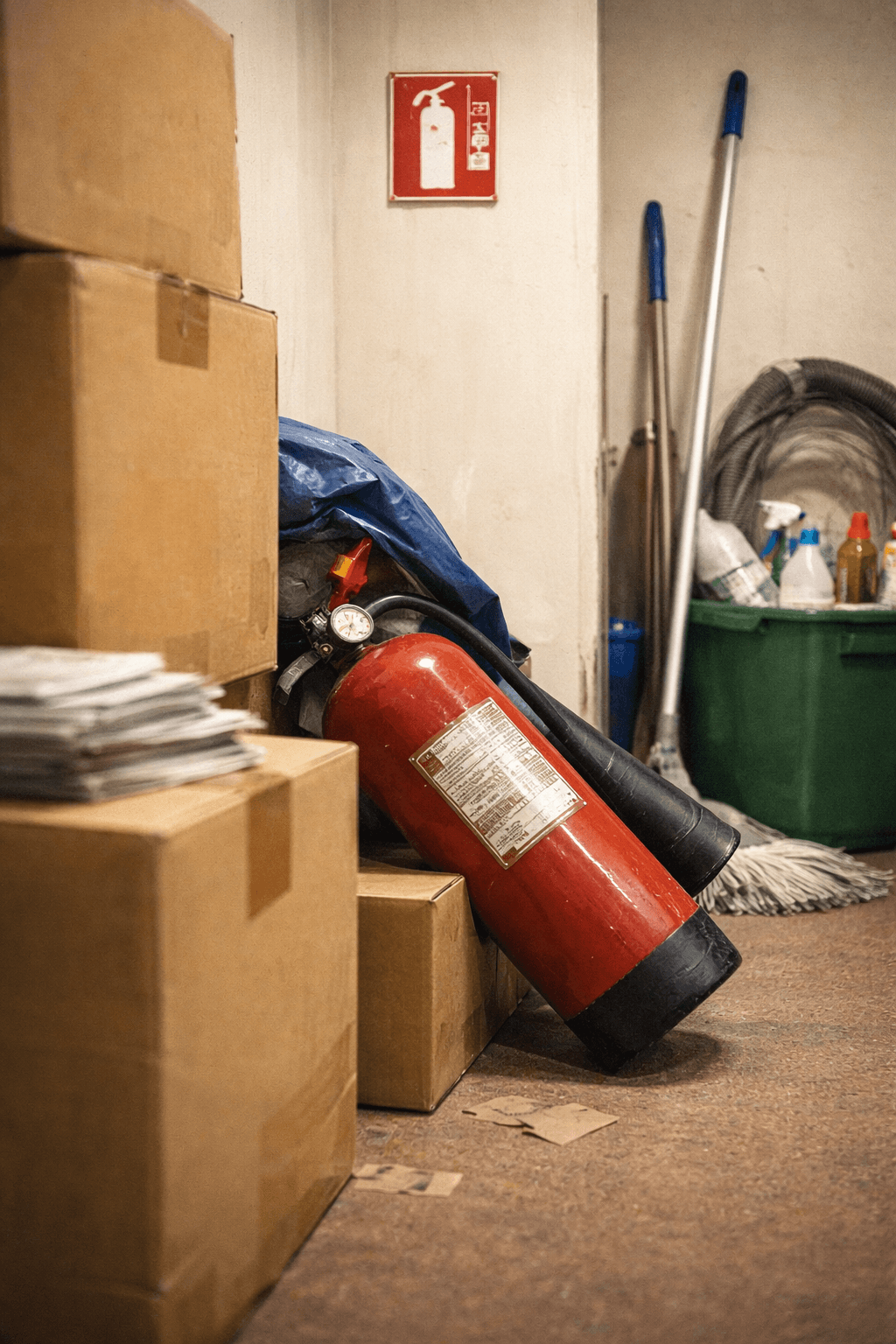
Fire extinguishers that work well are vital in the first minutes of a fire emergency. Many UK properties fail safety inspections due to wrong equipment or poor accessibility. People have died when corroded marine fire extinguishers exploded during use [19].
Types of extinguishers and where to place them
UK fire extinguishers must meet BS EN3 standards with red bodies and colour-coded labels that indicate their type:
Water (red label): For Class A fires (paper, wood, textiles)
CO2 (black label): For electrical fires and flammable liquids
Foam (cream label): For Class A and B fires (flammable liquids)
Dry Powder (blue label): For Class A, B, C fires (not recommended indoors)
Wet Chemical (yellow label): For Class F fires (cooking oils and fats)
Specific regulations govern placement. Standard guidance requires at least two Class A extinguishers on each storey. You should position extinguishers so people never travel more than 30 metres to reach one for Class A and C fires, or 10 metres for Class B and F fires. These units should be near exits and fire alarm points to help people move away from danger.
Common mistakes landlords make
My inspections reveal several recurring errors in properties. Landlords often choose the wrong type of extinguisher for the environment—like water extinguishers near electrical equipment. They also position extinguishers too close to fire hazards or block access with furniture.
There's another reason for concern - improper mounting. Small extinguishers (under 4kg) need handles about 1.5m from the floor, while heavier ones work best at 1m height. Many landlords also fail to provide clear signs explaining the extinguisher type and usage instructions.
How to ensure proper maintenance
UK regulations mandate annual servicing of all fire extinguishers by qualified personnel. Water, foam and powder extinguishers need extended servicing every five years, while CO2 extinguishers require it every ten years.
You should conduct visual inspections monthly between professional service visits. Check if the extinguisher stays in its designated spot, remains untampered, shows right pressure readings, and keeps intact safety seals and pins. These simple checks help spot problems before they become dangerous.
Extinguishers need immediate refilling or replacement after any use, even partial discharge. BAFE-qualified technicians should handle maintenance to meet British Standards.
Inadequate Fire Safety Training and Tenant Awareness
Fire safety goes beyond just having physical equipment and assessments. It needs proper education and awareness among occupants. Even buildings with good alarms and clear exits can become unsafe when tenants don't know what to do.
Why tenant education matters
Fire safety isn't just the landlord's job—property owners and occupants share this responsibility. When tenants learn proper safety measures, they can spot potential dangers, respond well during emergencies, and take care of safety equipment. Many accidents could be prevented if residents had simple fire safety knowledge.
Well-informed tenants tend to flag concerns quickly, check smoke alarms often, and keep escape paths clear. This active involvement creates a safety-minded community that reduces fire risks by a lot.
What landlords should include in safety briefings
Safety briefings need to cover:
How to evacuate and whether the building has a "stay put" policy
Steps to test smoke and carbon monoxide alarms
Ways to keep exit routes clear and report fire door damage
Steps to shut off utilities (gas, electric, water)
Tips to prevent kitchen fires, electrical hazards, and store flammable items safely
Landlords need to explain fire safety measures and stress the importance of testing smoke alarms monthly. Tenants should also know how to reach you right away about safety concerns.
How to run effective fire drills
Fire drills help you spot evacuation problems before real emergencies happen. UK law requires at least one fire drill each year, and you must record results in your fire safety plan.
Before running drills, set up clear escape routes with proper signs. You'll need fire wardens to watch over evacuation, track how long it takes everyone to get out, and notice how people behave.
After each drill, meet to discuss what needs improvement. Write everything in your fire safety logbook - the date, how long evacuation took, and what needs to be fixed.
Conclusion
Fire safety compliance is a moral duty and legal requirement for UK property owners to protect lives and assets. This piece highlights several common fire safety failures that still affect UK properties despite existing regulations.
Blocked escape routes are among the most dangerous hazards that can trap people during emergencies when time is crucial. Faulty or missing smoke alarms steal precious evacuation time, while poor risk assessments leave weak spots unchecked until it's too late.
Fire safety needs alertness rather than a laid-back attitude. Property owners should make regular inspections, equipment maintenance, and detailed documentation their standard practise instead of occasional tasks. Of course, non-compliance carries hefty financial penalties—from £5,000 fines to jail time—but the human cost is nowhere near comparable.
Fire safety works best when everyone participates. While property owners must ensure compliance, tenants are just as vital in keeping the environment safe through awareness and proper behaviour. Clear communication, regular drills, and detailed safety briefings are the foundations of an effective fire safety strategy.
A systematic, proactive approach to fire safety beats reactive measures after something goes wrong. You'll substantially lower risks and stay compliant by tackling each area in this piece—escape routes, alarm systems, risk assessments, fire extinguishers, and tenant education.
Cutting corners on fire safety can lead to devastating results. Good safeguards protect lives, save property, and give peace of mind. Detailed fire safety isn't just about meeting basic standards—it shows our steadfast dedication to creating truly safe spaces for everyone in our care.
Explore
Discover expert insights, tips, and updates on property compliance, safety regulations, and best practices to keep your properties secure and compliant.